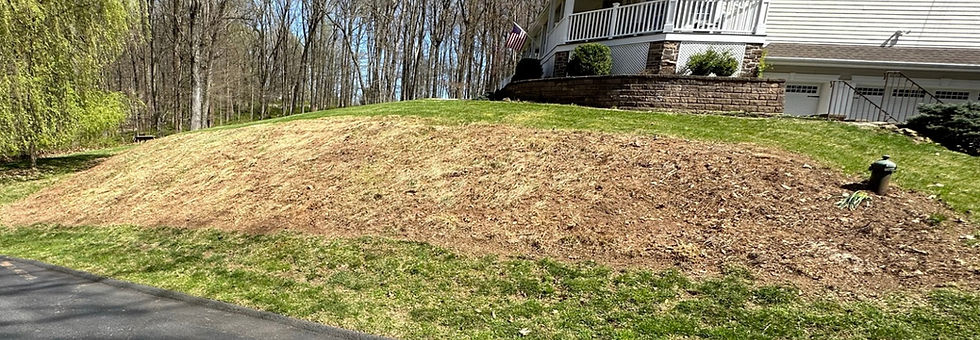
Thirsty Lawn, Empty Wallet: Why Smart Homeowners Are Ditching Grass This Summer
- 7 days ago
- 3 min read
If your lawn has gone from lush green to crunchy brown by mid-July, you're not alone. As summer heat waves stretch longer and water restrictions tighten across the country, homeowners everywhere are rethinking the traditional grass lawn — and turning to drought-tolerant landscaping (also known as xeriscaping) instead.
This isn't just a passing trend. It's one of the smartest yard projects you can tackle right now, and late summer is actually a great time to start planning and prepping, so your yard is ready to thrive by fall planting season.

What Is Drought-Tolerant Landscaping?
Drought-tolerant landscaping (xeriscaping) is a design approach that uses native and low-water plants, efficient irrigation, and smart hardscaping to create a yard that looks great with a fraction of the water a traditional lawn needs. Instead of fighting your climate, you work with it.
Think ornamental grasses, succulents, native wildflowers, gravel pathways, and mulch beds — layered together into a design that's actually more visually interesting than a flat green rectangle of turf.
Why This Summer Is the Right Time
A few reasons this project is especially timely right now:
Water bills are spiking. Lawn irrigation can account for up to 50% of a household's summer water use. Cutting that down has an immediate impact on your utility bill.
Many regions are under watering restrictions. If your area limits sprinkler days, a xeriscaped yard keeps looking good regardless of the schedule.
Late summer is prime planning season. Even though it's hot now, this is the ideal window to map out your design so you can plant natives in early fall, when cooler temperatures and rain help new plants establish roots before winter.
Curb appeal and home value. Xeriscaped yards are increasingly seen as a premium feature, not a downgrade — especially in dry climates.
How to Get Started: A Simple Step-by-Step Plan
1. Assess Your Yard's Sun and Soil
Walk your yard and note which areas get full sun, partial shade, and full shade. Check your soil type too — sandy soil drains fast, clay holds water. This determines which drought-tolerant plants will actually thrive.
2. Shrink Your Lawn (You Don't Have to Kill It Entirely)
You don't need to remove all your grass. Start by replacing the thirstiest, least-used sections — like strips along the driveway or areas under trees where grass struggles anyway — with a drought-tolerant bed.
3. Choose Native and Adapted Plants
Native plants are the backbone of xeriscaping because they're already adapted to your local rainfall and soil. Good general options include:
Ornamental grasses (blue fescue, feather reed grass)
Lavender and Russian sage
Sedum and other succulents
Yarrow and coneflower
Native wildflower mixes
Check with your local extension office or a native plant nursery for species specific to your region — this is the single biggest factor in long-term success.
4. Mulch Heavily
A 2–3 inch layer of mulch around plants dramatically reduces water evaporation, suppresses weeds, and moderates soil temperature. It's one of the cheapest, highest-impact steps in the whole project.
5. Upgrade to Drip Irrigation
If you keep any irrigation at all, swap sprinklers for drip lines or soaker hoses in your new beds. Drip irrigation delivers water directly to roots with far less waste than overhead spraying.
6. Add Hardscaping for Structure
Gravel paths, flagstone patios, and decorative rock beds add visual structure without needing any water at all. They also break up large plant beds so the design doesn't look overgrown.
Common Mistakes to Avoid
Going 100% rock with no plants. This actually raises the temperature around your home and looks stark. Balance hardscaping with greenery.
Skipping the soil prep. Even drought-tolerant plants need decent drainage to establish. Amend heavy clay soil before planting.
Overwatering new plants. New drought-tolerant plants still need regular water for the first few months while roots establish — don't assume "drought-tolerant" means "no water ever."
Ignoring your HOA guidelines. Some HOAs have restrictions on lawn removal — check before you dig.
The Payoff
A well-designed drought-tolerant yard typically uses 50–70% less water than a traditional lawn, requires far less mowing and maintenance, and stays attractive through the hottest months instead of going dormant and brown. It's a project that pays for itself in water savings within a few seasons — and gives your yard a distinctive look that stands out on the block.
If you're staring at a struggling lawn this July, consider this your sign: this is the season to start planning your switch. Need help planning or installing, give Environmental Landscape Services a call!