


Why Your NJ Lawn Looks Rough This Spring — And How to Fix It
Spring is finally here in Morris and Somerset County — but if you've stepped outside lately and thought "why does my lawn look worse than it did in the fall?", you're not alone. This year's wet, unpredictable New Jersey spring has left thousands of homeowners across Chester, Mendham, Far Hills, and Bedminster staring at patchy, spongy, or yellowing turf wondering what went wrong.
The good news? Most of what you're seeing is fixable — and the next 4 to 6 weeks are the perfect window to act. Here's what's really going on with your lawn, and exactly what you can do about it.
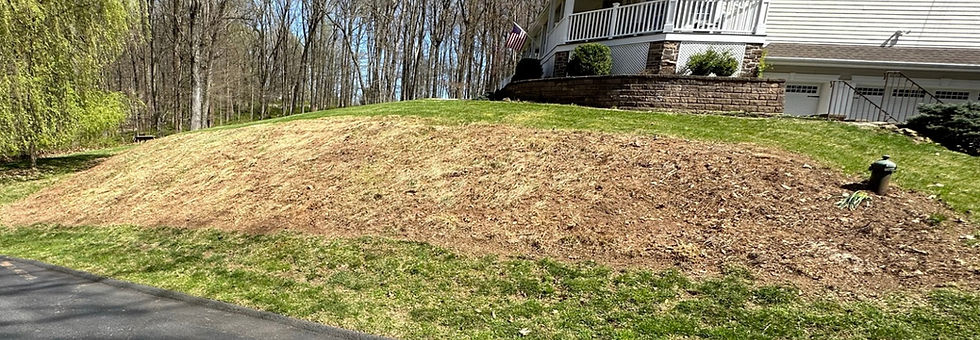
What a Wet New Jersey Spring Does to Your Lawn
New Jersey's spring weather is notoriously unpredictable, but the past several seasons have brought extended periods of heavy rainfall, slow-draining soils, and cool temperatures that linger well into May. For your lawn, this combination is a recipe for a handful of very common — and very treatable — problems.
Soil Compaction and Waterlogging When the ground stays saturated for days or weeks at a time, the soil particles get pushed together, eliminating the air pockets that grass roots depend on. The result is compacted soil that sheds water even when dry, making it nearly impossible for new grass to establish. If your lawn feels spongy when you walk on it, or if you're seeing standing water in low spots hours after a rain, compaction and poor drainage are working against you.
Snow Mold and Fungal Disease One of the most common calls we get every spring in Chester and Mendham is about circular, straw-colored patches in the lawn — sometimes with a pinkish or grayish crust at the edges. This is snow mold, a fungal disease that thrives under wet, matted conditions. It's especially common where leaves or debris were left on the lawn over winter, trapping moisture and creating the perfect fungal environment.
Thatch Buildup Thatch — the layer of dead grass stems and roots that builds up between the soil surface and the green growth — thickens over wet seasons because decomposition slows down in waterlogged soil. A thatch layer over half an inch thick blocks water, air, and nutrients from reaching the roots and sets the stage for more disease.
Bare and Thin Spots Heavy foot traffic on saturated soil, frost heaving, and winter salt runoff from driveways and roads (especially common in our area) can leave you with bare patches ranging from the size of a dinner plate to several square feet. Left alone, these spots become weed magnets by mid-summer.
The Right Fix for Each Problem — A Step-by-Step Spring Recovery Plan
Step 1: Rake Out the Damage First
Before you do anything else, give your lawn a thorough spring dethatching rake. Use a stiff-tined rake to pull up dead matted grass, loosen any snow mold crusting, and let air get back down to the soil. This isn't just aesthetic cleanup — it's the single most important first step for recovery because it breaks up the suffocating mat that's preventing new growth.
Don't be alarmed at how much comes up. A healthy lawn can look surprisingly thin right after a good spring raking, but it bounces back quickly once it has airflow again.
Step 2: Aerate Your Lawn
For any lawn showing signs of compaction — spongy spots, water pooling, or slow growth — core aeration is essential. Aeration pulls small plugs of soil out of the ground, creating channels for air, water, and fertilizer to penetrate down to the root zone.
In our area of North Jersey, clay-heavy soils (very common in Morris and Somerset Counties) compact more severely than sandier soils, making annual aeration especially valuable. The ideal time to aerate cool-season grasses like the Kentucky Bluegrass, Tall Fescue, and Perennial Ryegrass that dominate lawns in Chester and Mendham is early-to-mid spring or early fall — right now is perfect.
Step 3: Overseed the Bare and Thin Areas
Once the lawn is raked out and aerated, it's time to overseed. For North Jersey lawns in USDA Zone 6b, we recommend a quality tall fescue blend or a Kentucky Bluegrass mix, depending on your sun and soil conditions. These grasses are naturally suited to our climate's hot summers, cold winters, and everything in between.
A few tips for successful overseeding this time of year:
Lightly rake or scratch the soil surface in bare areas before spreading seed — good seed-to-soil contact is everything
Keep the seeded areas consistently moist for the first 2 to 3 weeks until germination occurs
Avoid heavy foot traffic on newly seeded areas
Don't apply pre-emergent weed control to areas you've overseeded — it will prevent your grass seed from germinating along with the weeds
Step 4: Fertilize the Right Way
Spring fertilization is important, but timing and product selection matter more than most homeowners realize. For a lawn recovering from a hard winter, a slow-release nitrogen fertilizer applied in late April through May gives grass the steady nutrition it needs without forcing excessive top growth that stresses already-weakened roots.
Avoid high-nitrogen "quick green" fertilizers early in the season — they push lush top growth but do little for root development, and they can actually make your lawn more susceptible to drought stress later in the summer.
If you're not sure what your lawn needs, a basic soil test (available through the Rutgers Cooperative Extension — a great local resource for NJ homeowners) will tell you exactly what nutrients your soil is lacking so you're not guessing.
Step 5: Address Drainage Issues Before Summer Arrives
If your lawn has chronic wet spots, pooling water, or areas where grass simply refuses to grow no matter what you do, the real issue is likely a drainage problem — not a lawn care problem. Wet spring conditions tend to make these spots obvious, which is actually a good thing. It tells you exactly where the problem is.
Drainage solutions range from simple grading corrections that redirect water away from problem areas, to French drains and dry creek beds that channel water to a more appropriate outlet. At Environmental Landscape Services, drainage solutions are one of our specialties — and addressing them now, before summer heat arrives, will protect your lawn investment for years to come.

When to Call a Professional
If your lawn has more than 30–40% damaged or bare area, or if you're dealing with persistent fungal issues that return year after year, a professional assessment is worth the call. There's no shame in having a pro take a look — sometimes what looks like a lawn problem is actually a soil problem, a drainage problem, or a grading issue that no amount of seed and fertilizer will solve on its own.
At Environmental Landscape Services, we've been caring for lawns across Chester, Mendham, Far Hills, Bedminster, Tewksbury, and the surrounding Morris and Somerset County area for many years with over 20 years of experience . Our background in land management and forestry means we look at your lawn as part of a larger ecosystem — not just a patch of grass to mow.
Whether you need a full spring cleanup and lawn restoration, a drainage assessment, or just a professional set of eyes on what's going on, we're happy to come out and take a look.
📞 Call or text us at 732-200-2976


